
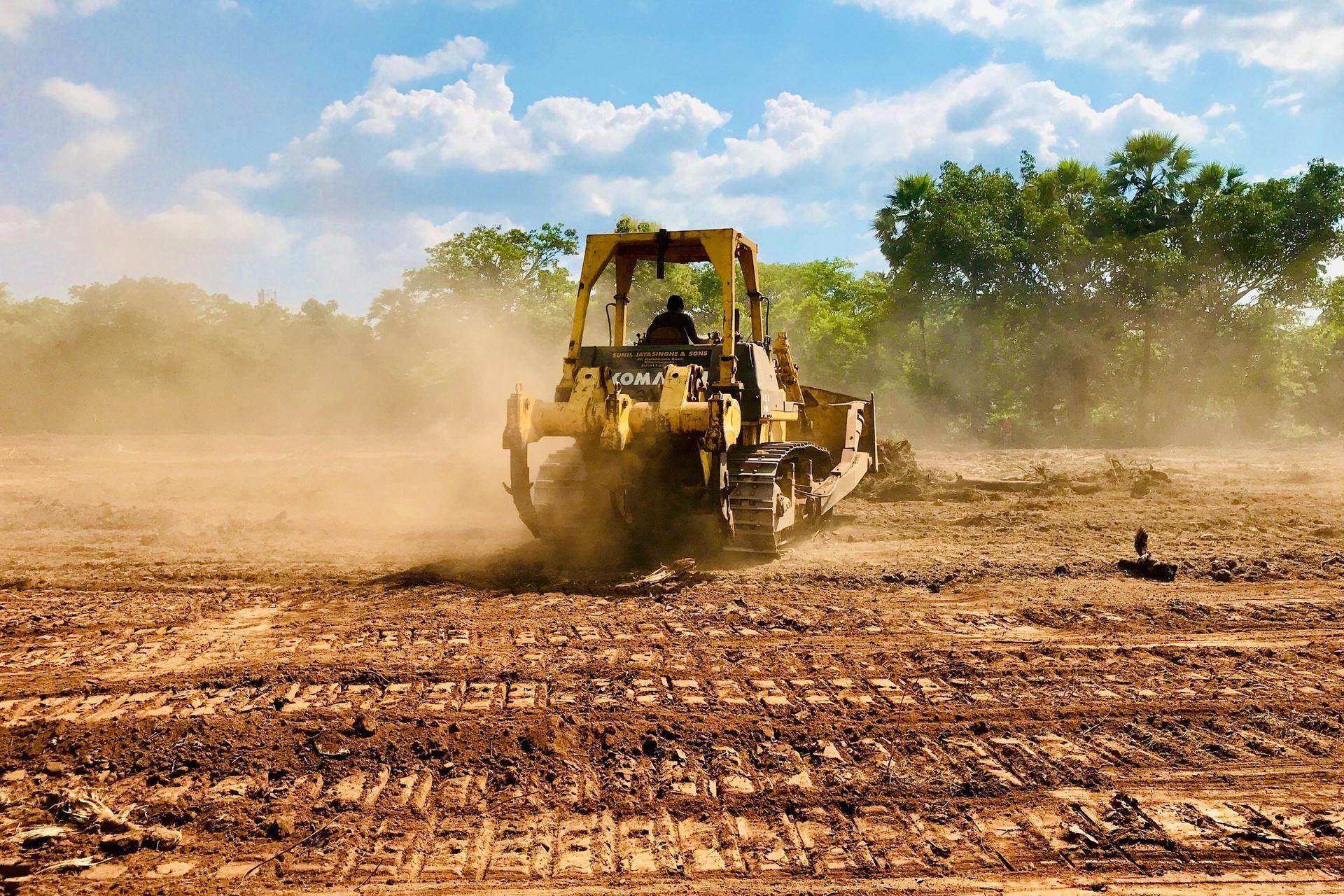
Residential land clearing in Metro Detroit typically runs $1,500 to $8,000 per project. On a per-acre basis, light brush and saplings price toward $1,500 to $3,000 an acre, while densely wooded ground with mature hardwoods prices toward the top of the range for the first acre. Per-acre cost falls on larger parcels as mobilization spreads across more ground. The number that matters is never the acre rate alone: stumps, grubbing, haul-off, and final grading are where quotes genuinely differ, and where teaser prices hide their second invoice.
The honest per-acre ranges, by what is standing on the ground
Vegetation density does most of the pricing work. An acre of brush and volunteer saplings is a mulching head and a long day. An acre of mature oaks and maples is felling, processing, stump decisions, and serious haul volume. These are the bands we quote and perform across Wayne, Oakland, and Macomb counties:
Why the per-acre rate falls as parcels grow
Mobilization is the fixed cost hiding inside every small-lot price: floating equipment to the site, setting up, and hauling away costs roughly the same whether the machine works one acre or five. Spread that fixed cost across a bigger parcel and the per-acre number drops, which is why a five-acre clearing quote never equals five times the one-acre price, and why comparing your two-acre quote against a neighbor's half-acre job tells you almost nothing. Quotes on larger ground are built per project, walked and scoped, and the acre rate is an output of that math, not an input to it.
The five variables that move your number
- Density and tree size. Stem count per acre and trunk diameter drive machine hours more than any other factor. A dozen 30-inch hardwoods can outweigh an acre of brush by themselves.
- Stump handling. Cutting trees is half the job; what happens below grade is the other half, and the half quotes most often dodge. Mulched-flush, ground, or fully grubbed out are three different prices and three different outcomes.
- Material disposition. Mulch spread on site is cheap. Hauling logs and grindings off site adds trucking and disposal, priced by volume, and changes the number meaningfully on dense ground.
- Access and terrain. Tight residential access, soft ground, slopes, and drainage features slow equipment. Metro Detroit's low, wet parcels can add matting or seasonal timing to the plan.
- The finish standard. "Cleared" can mean mulched rough ground or it can mean grubbed, graded, and ready for a builder's surveyor. The gap between those two finishes is real money, and the quote should name which one you bought.
Method matters: forestry mulching vs. traditional clearing
Forestry mulching runs a drum head through standing vegetation and leaves the ground covered in mulch, roots in place. It is fast, cheaper on light-to-moderate ground, requires no burn or haul-off, and controls erosion immediately, the right tool for overgrowth reclamation, sightlines, and maintenance clearing. Traditional clearing fells, processes, and removes material, then grubs stumps and roots out of the ground, slower and costlier, and the only correct answer when the ground must be buildable, roots and stumps cannot live under a foundation, a driveway, or a septic field. Plenty of projects blend the two: mulch the brush acreage, grub the building envelope. The method decision is the first fork in every honest quote, and it is a use-of-land question before it is a price question.
Where each method wins
- Mulching wins: overgrown lot cleanup, brush reclamation, trails and sightlines, pasture recovery, pre-listing property cleanup, invasive control.
- Traditional wins: building pads, driveways, utility corridors, septic fields, anywhere excavation follows.
- Blends win: larger parcels where one building envelope needs grubbing and the rest needs taming.
The line items that separate real quotes from teasers
Per-acre teaser pricing survives on exclusions. Before comparing any two numbers, make both answer the same list:
- Stumps: flush-cut, ground below grade, or grubbed and removed, stated per stump or per area, not "as needed."
- Haul-off: included, or is the mulch pile and log deck yours to admire?
- Grading: track-walked rough, or finish-graded to drain?
- MISS DIG and utilities: marking before any grubbing is non-optional; someone owns the call.
- Wetland and ordinance review: EGLE regulates wetland impacts statewide, and a number of Metro Detroit communities run tree preservation ordinances; the quote should say who verified what applies to your parcel.
- Season and ground conditions: frozen ground can be an asset on wet parcels; spring thaw can be a schedule item. An honest quote names its assumptions.
A suspiciously low per-acre number is usually mulch-only: no stump work, no haul-off, no grading, no utility or wetland verification. It is a legitimate price for a different job than the one you probably need. Ask the six-item list above and watch the real number assemble itself.
What the money is actually buying
Clearing prices look abstract until you see the cost structure underneath. The machine itself, a forestry mulcher or an excavator with the right attachments, represents serious capital working by the hour, and the operator running it is the difference between a parcel processed clean and a parcel chewed ragged. Trucking is priced by the load and disposal by the ton, which is why material disposition swings quotes and why on-site mulch is the budget's friend. Then there is the part with no line item: knowing where the wet ground will swallow a machine, which stems hide fence wire, and what the township's tree ordinance says before the saw proves it the hard way. Cheap clearing is usually cheap because one of those components is missing, and the missing one always introduces itself later.
Three project shapes, three ways the math lands
- The sightline and cleanup job. A half-acre of buckthorn and volunteers around a house or ahead of a listing. Mulching territory, bottom of the band, one machine day, mulch stays as ground cover, and the property looks like someone owns it again by dinner.
- The build lot. A wooded infill parcel headed for a foundation. The building envelope gets traditional clearing with full grubbing and compacted backfill while the perimeter gets mulched, a blended scope that prices in the middle and hands the builder ground that will pass inspection instead of ground that merely photographs well.
- The acreage reclamation. Multiple overgrown acres going back into use. Per-acre economics finally work in the owner's favor, mobilization amortizes, the mulcher runs production passes, and the per-acre rate lands well below what the first acre alone would cost. This is the project shape where a walked, per-project quote beats any per-acre arithmetic decisively.
Timing the work: what season does to the price
Clearing runs year-round in Michigan, and each season has a personality. Winter's frozen ground is an asset on wet parcels, equipment travels where spring would swallow it, and dormant vegetation processes cleanly. Spring thaw is the season to respect: saturated ground slows machines and rutting risk rises, which is why wet-parcel projects often get scheduled around it rather than through it. Summer and fall are the workhorse windows. None of this changes the fundamentals, but on marginal ground the calendar is a legitimate line item, and a contractor who talks about your parcel's drainage before quoting has already told you something about the quality of the number.
How to buy land clearing without buying it twice
- State the land's next use first. The mulch-versus-grub decision flows from it, and so does half the price.
- Get the quote from a walkthrough, never from an aerial photo and a phone call.
- Demand the six line items in writing: stumps, haul-off, grading, MISS DIG, wetland and ordinance verification, seasonal assumptions.
- Compare finish standards, not acre rates. Two quotes at the same per-acre price can be different jobs wearing the same number.
- Ask what happens to the material, and who owns the surprises overgrowth tends to hide.
Clearing is the first trade on the site and it sets up every trade that follows. Scoped from a real walkthrough, priced with the line items in daylight, and finished to the standard the next phase needs, it is one of the most satisfying dollars on any land project: the parcel you actually bought, visible for the first time.