
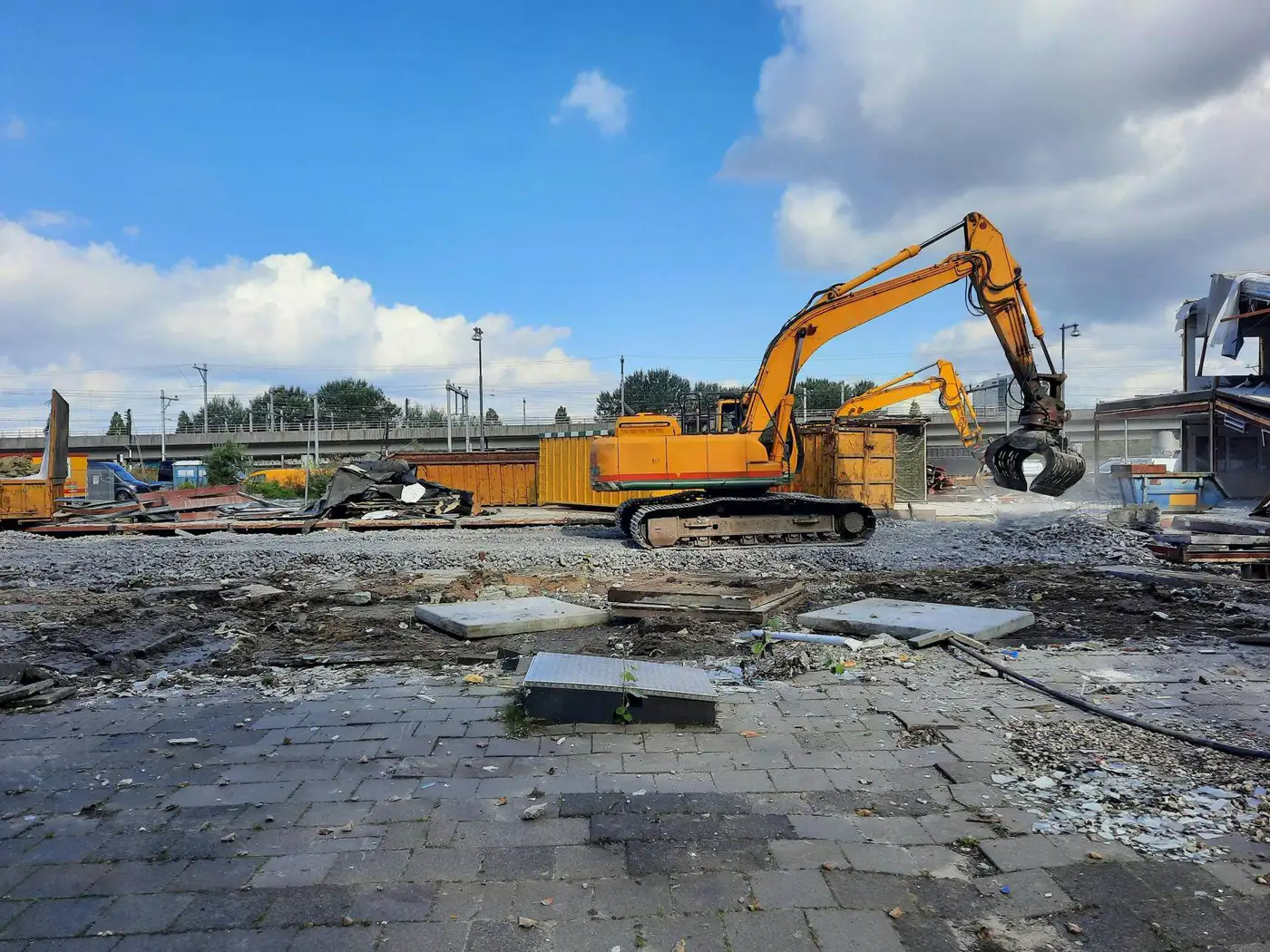
Detroit demolition permits typically take 1 to 3 weeks from complete application to approval through BSEED. Utility disconnects add another 1 to 2 weeks after permit issuance before work can start. Historic district projects add 4 to 8 weeks on top. Plan for 4 to 6 weeks total from application to shovel-ready for a straightforward residential demolition.
The demolition permit process in Detroit is more complex than most municipalities and more consequential when it goes wrong. BSEED coordinates with utility providers, state environmental regulators, and sometimes federal agencies, and a permit that looks approved on paper can still be blocked from starting if utility disconnects or asbestos notifications are incomplete. This guide walks through the full process as it works in 2026, so property owners and general contractors know what to expect before the application goes in.
What BSEED is and why it matters
BSEED stands for the Buildings, Safety Engineering and Environmental Department. It is the City of Detroit agency responsible for all building permits, inspections, and code enforcement within city limits. For demolition specifically, BSEED issues wrecking permits, coordinates with utility providers on disconnect clearances, reviews structural and environmental compliance, and conducts the inspections that authorize demolition to begin and confirm proper completion.
BSEED is distinct from suburban municipal building departments, which each handle permits for their own jurisdictions. A demolition in Warren goes through the Warren Building Department. A demolition in Southfield goes through Southfield's department. Only work within Detroit city limits goes through BSEED. The process described in this guide is Detroit-specific and does not necessarily apply one-for-one in neighboring municipalities.
Who needs a demolition permit in Detroit
A BSEED wrecking permit is required for any structure being demolished within Detroit city limits, including:
- Single-family homes. Full and partial demolitions both require wrecking permits.
- Multi-unit residential. Duplexes, apartment buildings, and multi-family structures.
- Commercial buildings. Offices, retail, restaurants, warehouses, and industrial facilities.
- Accessory structures. Detached garages, sheds, and outbuildings over 200 square feet.
- Foundations. Foundation-only removal work when the structure above has already been removed.
Very small accessory structures under approximately 200 square feet and temporary structures may qualify for simpler permit pathways or be exempt depending on construction type. When in doubt, BSEED counter staff can confirm which pathway applies to a specific structure.
The 7-step permit process
A straightforward Detroit demolition permit follows seven main steps from start to authorized demolition. Here is what each step involves.
Before applying, the licensed demolition contractor completes a site assessment to determine structure type, square footage, construction materials, and year built. Year built drives the asbestos testing requirement. A NESHAP inspection by a licensed asbestos inspector is typically completed during this phase for any pre-1990 structure, which is most of Detroit's building stock.
For any demolition of a structure over 160 square feet, a NESHAP notification must be submitted to Michigan's Department of Environment, Great Lakes, and Energy, commonly called EGLE. The notification is a federal asbestos regulation requirement administered by the state. Filed at least 10 working days before demolition begins. If asbestos is present, the notification identifies the licensed abatement contractor and the removal plan.
The property owner signs utility disconnect authorization forms, typically prepared by the contractor. Requests go to DTE Energy for electric and gas service termination, and to the water authority for water service termination. Utility providers remove meters and issue written disconnect confirmations. These confirmations are required before BSEED will issue the permit. Requests can overlap with other permit steps but disconnects must be complete before demolition begins.
The contractor submits the completed wrecking permit application to BSEED along with all supporting documentation: property ownership or authorization, contractor license and insurance, site plan, NESHAP submittal confirmation, and utility disconnect confirmations when received. Applications can be submitted in person at the BSEED counter at Coleman A. Young Municipal Center or through the City of Detroit's eLaps electronic permit system.
BSEED reviews the application, verifies contractor credentials, confirms zoning compliance, checks historic district status, and coordinates any required inter-departmental reviews. Clean applications with complete documentation and no flags typically approve within one to two weeks. Applications requiring supplemental review can take three to six weeks. Historic district review adds four to eight weeks beyond baseline.
Once approved, the wrecking permit is issued. The contractor posts the permit on site, installs required erosion control and site fencing, arranges asbestos abatement if required by the NESHAP inspection, and coordinates any street closure permits or traffic control if the site is urban. Final utility disconnect confirmations, if still pending at permit issuance, must arrive before demolition can physically start.
Demolition begins. For a typical residential teardown, active machine work runs one to three days. Larger commercial projects run one to four weeks. After structural demolition, debris hauling, foundation removal if in scope, and final grading are completed. BSEED conducts a final inspection to confirm the site is cleared, graded, and stabilized. Erosion control bond refund is processed after successful final inspection.
Documentation checklist
A complete BSEED wrecking permit application typically includes the following. Missing documentation is the most common cause of approval delays, so gather everything before submission.
Completed wrecking permit application. Proof of property ownership (deed or tax record) or signed owner authorization letter. Licensed demolition contractor's city license and general liability insurance certificate. Site plan showing the structure, lot lines, adjacent properties, and setbacks. Utility disconnect confirmations from DTE Energy and water authority. Asbestos inspection report or NESHAP notification confirmation from EGLE. Erosion control plan if required by site conditions. Historic District Commission approval if the property is within a locally designated historic district.
Authorization letter details
When the permit applicant is not the property owner, the owner must sign a notarized authorization letter giving the applicant permission to file for the demolition permit. The letter should include the property address, parcel ID, owner name, applicant or contractor name, and effective date. Template forms are available at the BSEED counter or through the eLaps system.
Site plan requirements
The site plan does not need to be engineered but must clearly show the structure being demolished, the lot boundaries, distances to property lines, adjacent structures on neighboring properties, any trees to be protected, and the location of on-site staging for equipment and debris. Hand-drawn plans are acceptable for simple residential work. Commercial projects typically require more detailed drawings.
Fees and how to budget for them
Detroit demolition permit costs include the BSEED wrecking permit fee itself plus several compliance and utility-related line items. Budget for the full set, not just the permit.
- BSEED wrecking permit. Residential typically $200 to $500. Commercial scales with square footage and can reach $3,000 or more for larger buildings.
- EGLE NESHAP notification. Filing fee is minimal, typically under $100. The inspection by a licensed asbestos inspector runs separately at $300 to $800.
- Utility disconnect fees. DTE Energy gas and electric combined typically $200 to $500. Water service termination typically included in city water account closure.
- Erosion control bond. $500 to $1,500 refundable deposit held until final inspection confirms the site was properly stabilized.
- Street closure permits. Required when equipment or debris trucks need to occupy the roadway. Detroit street closure permits run $150 to $400 per day.
- Historic District Commission review. If applicable, review fees vary. Plan for $200 to $800 in review costs plus the timeline extension.
For a typical single-family residential demolition in Detroit, total permit and compliance costs usually fall between $1,200 and $3,000 excluding asbestos abatement if required.
Realistic timeline expectations
Every Detroit demolition is different, but here are realistic timelines for three common project types.
Straightforward residential demolition
A single-family home with no asbestos concerns, outside historic districts, with standard utility configurations. Plan for 3 to 5 weeks from the decision to proceed through to demolition start. Pre-application assessment 1 week, NESHAP inspection and filing 1 to 2 weeks with the 10-day waiting period, utility disconnects 1 to 2 weeks, BSEED review 1 to 2 weeks. Steps overlap, so total elapsed time is shorter than the sum.
Residential in a historic district
Same structure but within a locally designated historic district. Plan for 8 to 14 weeks. Historic District Commission review adds 4 to 8 weeks, sometimes longer for contested projects, and typically requires photographic documentation surveys and may require documentation of salvageable architectural elements.
Commercial building, pre-1990
A mid-size commercial building with significant asbestos-containing materials. Plan for 8 to 20 weeks. Phase I environmental assessment adds 2 to 4 weeks. Asbestos abatement scope and scheduling adds 3 to 8 weeks. BSEED review runs longer for commercial due to additional coordination. Utility disconnects for commercial three-phase electric service sometimes take 3 to 4 weeks.
A permit approved on paper is not a permit that can be worked under. Utility disconnects have to confirm in writing, and NESHAP notifications have to clear the 10-day waiting period, before any crew can actually start demolition.
Common delays and how to avoid them
Most Detroit demolition permit delays come from a handful of recurring issues. Catching them up front saves weeks.
Incomplete documentation
The top cause of delays. Applications submitted without all required documents sit in BSEED's queue waiting for supplements, which effectively restarts the review clock when the missing pieces arrive. Double-check the documentation checklist before submission.
Utility disconnect delays
DTE Energy disconnect scheduling has tightened in recent years. Standard residential disconnects run one to two weeks, but peak-season backlogs can push that to three weeks. Submit utility disconnect requests as early as possible, even before the BSEED application goes in.
NESHAP notification waiting period
The 10 working days between NESHAP filing and earliest allowed demolition is non-negotiable. If the NESHAP isn't filed until the permit is in hand, demolition is automatically delayed by at least two weeks. Good contractors file NESHAP notifications as soon as the asbestos inspection is complete, running in parallel with other permit steps.
Historic district review surprises
Property owners sometimes do not realize their property is within a historic district until the BSEED application flags it. Check the Detroit Historic District Commission boundaries before applying. If the property is within a locally designated district, plan for additional review time and any required salvage documentation.
Erosion control requirements
Projects near protected waterways, steep grades, or storm drain inlets may require more detailed erosion control plans than standard. If the site has sensitive conditions, prepare a more thorough erosion control plan rather than the basic template to avoid reviewer callbacks.
Cost and timeline details for the demolition work itself are covered in the Metro Detroit house demolition cost guide. If asbestos was flagged during the NESHAP inspection, the asbestos in older Metro Detroit homes guide covers what abatement involves.