
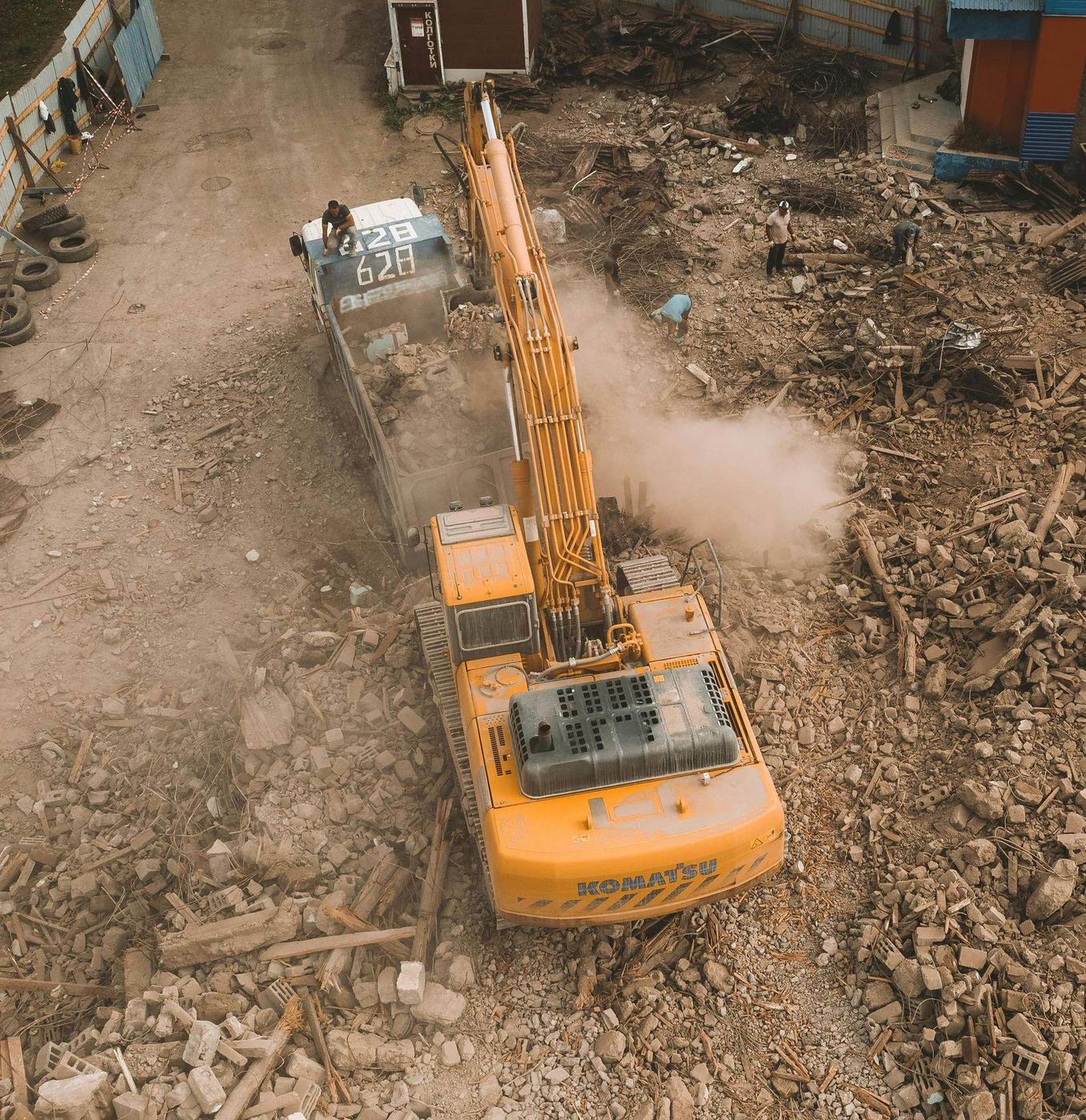
The budget killers are almost never the demolition itself. They are asbestos abatement, utility disconnect fees and delays, foundation and slab removal scoped as extra, tree and stump work, permit and bond fees, debris tonnage assumptions, and site restoration. A complete quote names each explicitly, included or excluded. The cheap quote is usually cheap because it excludes them silently, and you buy the difference back later at worse prices.
The seven usual suspects, priced
1. Asbestos testing and abatement
Michigan requires an asbestos inspection before demolition, and pre-1980 houses, which is most of Metro Detroit, usually test positive somewhere. The survey runs $400 to $800; abatement, when materials are found, runs from a couple thousand for basement pipe wrap into five figures for vermiculite or whole-house tile. The hidden version is the quote that says "abatement as needed" with no survey behind it, which converts a known cost into a mid-project surprise at mid-project prices.
2. Utility disconnects, fees and idle days
The disconnect fees themselves are modest. The schedule risk is not: DTE appointments book weeks out, and a mobilized crew waiting on a gas cut is money burning quietly. Ask every bidder who requests, who confirms, and who eats the idle day if the appointment slips, because someone does, and the contract decides who.
3. Foundation and slab removal
Some quotes stop at grade, and to-grade demolition is a legitimate scope, if you know that is what you bought. If yours stops there, the foundation, footings, and slab are a second project hiding under the first: breaking, excavating, hauling concrete, then importing and compacting fill. On a typical basement house this line runs thousands by itself. Confirm removal depth in feet, and whether basement fill and compaction are included, in writing.
4. Trees and stumps
Removal inside the work radius is cheap while the excavator is already there and brutal as a separate mobilization later. Stump grinding is the classic silent exclusion, the tree disappears from the quote and the stump stays in the yard. Decide every tree deliberately, and get stumps into the written scope one way or the other.
5. Permits, bonds, and right-of-way
Wrecking permit fees run $200 to $500 for Detroit residential through BSEED, with suburban schedules in similar territory. Some municipalities add refundable sidewalk or right-of-way bonds, refundable being a word that requires follow-up. Tight lots sometimes need street-use permits for staging. None of these are large individually; together they are a few hundred to over a thousand dollars that either lives in the quote or lands on you.
6. Debris weight assumptions
Quotes built on optimistic tonnage meet plaster, brick, and rain-soaked lumber at the scale house. Ask whether hauling is fixed-scope or tonnage-plus, and if tonnage-plus, what the assumed weight is and what the next ton costs. A pre-war plaster house weighs dramatically more than its drywall-era twin, and experienced hauling operations price that difference up front instead of discovering it.
7. Site restoration
Rough grade is not final grade. Topsoil, seed, and a lot a mower can actually cross are either in scope or they are your next invoice from a landscaper. "Grade to drain" versus "finish grade with four inches of topsoil, seeded" are different deliverables separated by real money, and the quote should say which one you bought.
What the hidden lines typically run
How honest quotes handle all of this
A complete residential demolition quote reads like a checklist: survey and abatement handling stated, disconnect responsibility assigned by name, removal depth defined in feet, foundation and slab explicitly in or out, tree and stump scope itemized, permits and fees listed, hauling model stated with its tonnage basis, and restoration described in finished terms. When a line is excluded, a good quote says so in daylight, so you can price it elsewhere instead of discovering it. The document should leave nothing for the two of you to argue about later, because everything arguable was answered before signing.
Normalizing quotes that do not match
Never compare bottom lines between quotes with different inclusion lists, that is comparing a car to a car minus its engine. Normalize first: take the lightest quote and add the missing scope at market cost using the table above, then line the totals up. Most of the time the mid-priced quote with full scope beats the low quote plus its exclusions, and the exercise shows you exactly where the low number came from. A one-page comparison grid, seven rows, one column per bidder, in-or-out plus price, takes twenty minutes and routinely saves thousands.
- Ask each bidder the same seven questions, in writing, and keep the answers with the quote.
- Reject "as needed" pricing on any line the survey or a site walk could make definite.
- Get depth, tonnage, and finish standards in numbers, not adjectives.
- Confirm who owns the schedule risk on utilities and permits, because that is where calendars die.
- Weight the bidder who walked the property, a quote produced without standing on the site is a form letter with your address on it.
Removal depth left undefined. The words 'as needed' next to abatement. Restoration described as rough grade only. A hauling line priced per ton with a small allowance. Bonds called refundable with no process stated. Any quote a contractor produced without walking the property.
The one-conversation version
If you take a single move from this page, take this one: before signing anything, walk the property with your demolition contractor and go through the seven items out loud, in or out, and at what number. The contractor who welcomes that conversation is the one whose quote survives contact with reality. The one who waves it off has told you where the surprises will come from, and roughly when.
When each surprise tends to surface
Hidden costs cluster at predictable moments, and knowing the calendar defuses most of them. Before permit: the asbestos survey findings, the permit and bond schedule, and the disconnect fees, all knowable, all cheap to know early. At mobilization: access and staging surprises, the right-of-way permit nobody mentioned, the tree that turns out to stand exactly where the excavator needs to sit. During demolition: the tonnage reality at the first scale tickets, the second slab under the first, the buried oil tank or old foundation nobody documented. After demolition: the restoration standard argument, rough grade meeting an owner who expected lawn, and the stump grinding that was never in anyone's scope. Every one of these has a before-contract question that neutralizes it, which is the entire argument of this article compressed into a calendar.
Two typical houses, two honest budgets
- The 1955 suburban ranch, drywall era, slab garage, two trees clear of the radius. Survey comes back light, maybe basement pipe wrap. The hidden-cost load is modest: abatement at the low end, standard permits, honest tonnage, restoration to seed. The complete quote and the cheap quote sit close together here, because there is less to silently exclude.
- The 1928 Detroit two-story, plaster and lath, transite-sided garage, basement, mature maple at the corner. This is where inclusion lists earn their keep: abatement mid-range or better, plaster tonnage that punishes optimistic hauling lines, foundation removal that is a real project, tree and stump decisions with money attached, and BSEED process to respect. The spread between the complete quote and the cheap quote is widest exactly here, and so is the regret if you compared bottom lines instead of scope.
Neither budget is a problem. Both are just houses. The problem is only ever the quote that priced one house while you owned the other.
The contract language that closes the gaps
Every hidden cost on this page has a sentence that kills it, and those sentences belong in the contract, not the conversation. Removal depth: stated in feet below grade, with foundation, footings, and slab named in or out. Abatement: survey attached, scope priced from findings, with a unit-rate schedule for anything discovered beyond it. Utilities: responsibility assigned by name with idle-day terms if appointments slip. Debris: fixed-scope hauling or a stated tonnage basis with the overage rate in writing. Restoration: the finish standard described in deliverable terms, inches of topsoil, seeded or not, stumps ground or not. Permits and bonds: itemized with who fronts and who recovers the refundable ones. None of this is adversarial; the contractors worth hiring write this way by default, because a contract that answers every question is also the contract that never gets argued about.
The bottom line
Residential demolition is not an expensive mystery; it is a knowable list of costs that some quotes name and others hide. The survey, the walked site, depth and tonnage in numbers, restoration in deliverables, and the seven-question comparison grid convert every hidden line into a visible one before a dollar is committed. Do that work up front, it is an afternoon, and the project you budget is the project you get, which is the entire difference between owners who describe their demolition as smooth and owners who describe it as a lesson.