
Wayne County. Detroit and beyond.
Demolition, hauling, and excavation across all of Wayne County. Detroit, Dearborn, Livonia, Westland, Taylor, and the Downriver communities. Pre-1970 housing stock means most of the work here is tied to the realities of older infrastructure: clay sewer lines, lead water services, legacy structures, and the permit landscape that goes with them.
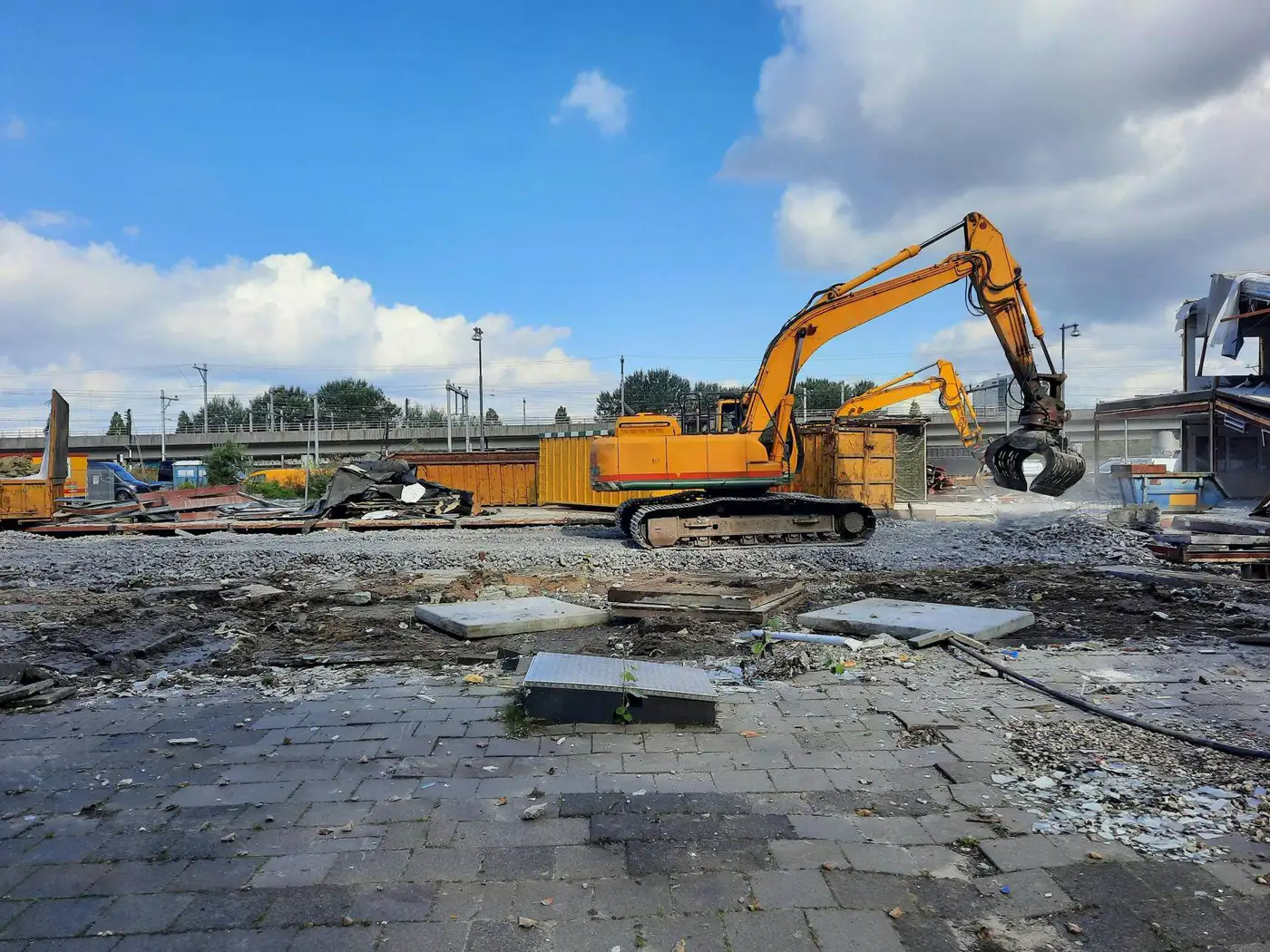
Industrial past.
Working present.
Wayne County sits at the center of Metro Detroit's industrial history, which means our work here deals with structures and infrastructure that were built for a very different economic moment.
Detroit alone carries hundreds of thousands of pre-1970 residential structures plus a large commercial and industrial building stock from the same era. Dearborn, Livonia, Westland, and the Downriver communities extend similar housing stock across the county. Clay sewer laterals, cast iron water services, and foundations built on glacial clay are the baseline conditions on most jobs.
We work across all of it. Single-family demolitions and sewer replacements in city neighborhoods. Commercial teardowns on former industrial sites. General contractor coordination on new construction and additions. The same core scope applies whether the project is in Indian Village, Westland, or Trenton.
Four services.
County-wide coverage.
The four service lines apply across every city in Wayne County, with the specific shape of the work shifting by neighborhood age, housing density, and whether the job sits in Detroit proper or the surrounding suburbs.
Residential & Commercial Demolition
Full structure teardowns, interior demolition, and selective demolition across Wayne County. Detroit's older housing stock means most of our residential demolition sits in neighborhoods where adjacent properties need careful protection during tear-down.
- Full residential structure teardowns
- Commercial & industrial demolition
- Interior gut-outs for renovation
- BSEED permit coordination
Construction Debris Hauling
Construction debris, demolition debris, property cleanout, and material hauling across Wayne County. Coordinated with active demolition sites and GC project schedules, sized to the job so trucks don't sit idle or get overwhelmed.
- Construction & demolition debris hauling
- Property cleanouts
- Post-demolition site cleanup
- Aggregate & material delivery
Sewer Replacement & Site Excavation
The aging clay and cast iron sewer laterals across Wayne County generate steady demand for full line replacement. Water line work, foundation excavation, utility trenching, and site prep round out the scope for new construction and rebuilds.
- Sewer line replacement (clay & cast iron)
- Water line repair & lead line replacement
- Foundation & underground utility excavation
- Site prep & grading
Where we work
in Wayne County.
Coverage spans the full county. These are the cities and communities where we run the most active scope, with response times and permit knowledge tuned to each municipality.
Permits handled.
No lost weeks.
Wayne County's permit landscape splits between the City of Detroit's BSEED process and the individual suburban building departments. Both are handled as standard scope on our projects.
BSEED Permits
The City of Detroit Buildings, Safety Engineering and Environmental Department processes all building, demolition, excavation, and right-of-way permits within the city. Demolition submissions require proof of asbestos abatement, utility disconnection, and site plans.
Residential demolition permits typically issue in 2 to 4 weeks when the submission is complete. Commercial demolition runs 4 to 8 weeks depending on scope. We coordinate BSEED submissions end to end so the project schedule builds the permit timeline in from day one.
Typical TurnaroundResidential 2-4 weeks · Commercial 4-8 weeksSuburban Building Departments
Dearborn, Livonia, Westland, Taylor, Canton, Plymouth, Redford, and the Downriver cities each operate their own building departments. Permit processes are similar in structure to Detroit but typically faster, with residential approvals often in 1 to 3 weeks.
Fees, submission requirements, and inspector availability vary by municipality. We handle applications with whichever department has jurisdiction, including coordination on cross-boundary right-of-way work and utility tie-ins.
Typical TurnaroundResidential 1-3 weeks · Commercial 3-6 weeksWayne County questions.
Answered directly.
Six questions we hear most often from property owners, general contractors, and developers working in Wayne County.
What cities in Wayne County does Liora Works serve?
Liora Works serves all of Wayne County for demolition, hauling, and excavation work. Primary coverage includes Detroit, Dearborn, Dearborn Heights, Livonia, Westland, Taylor, Wayne, Garden City, Inkster, Redford Township, Canton Township, Plymouth, Romulus, and the Downriver communities including Lincoln Park, Allen Park, Southgate, Wyandotte, and Trenton. Response times are typically fastest in Detroit proper given proximity to the Metro Detroit core, with 24 to 48 hour quote turnaround across the county.
How do Detroit building permits work for demolition and excavation?
The City of Detroit handles building, demolition, and right-of-way permits through the Buildings, Safety Engineering and Environmental Department, known as BSEED. Demolition permits typically require submission of an abatement clearance from the asbestos inspection, proof of utility disconnection, site plan, and contractor credentials. Residential demolition permits typically take 2 to 4 weeks from complete submission. Commercial demolition can take 4 to 8 weeks depending on scope. Liora Works handles BSEED submissions as part of demolition scope, which avoids the common delays that come from incomplete submissions.
Why is so much Wayne County housing stock candidates for demolition?
Wayne County has some of the oldest housing stock in Michigan, with large portions of Detroit, Highland Park, Hamtramck, and Dearborn built between 1900 and 1960. Decades of population decline, particularly in Detroit, left many structures vacant or abandoned past the point of rehabilitation. The City of Detroit Demolition Program has been one of the largest municipal demolition efforts in the United States. Private demolition continues on properties that are not part of municipal programs, including blighted structures being cleared by private owners, investors acquiring tear-down lots, and aging commercial buildings being replaced by new development.
What soil conditions should we expect in Wayne County?
Wayne County sits primarily on dense clay soils deposited by glacial action and former lake beds. This is particularly true in western Wayne (Livonia, Westland, Canton) and across Detroit. Dense clay holds excavation walls well but drains slowly, which affects dewatering strategy on deeper work and soil drying time before concrete pour on foundation projects. Areas closer to the Rouge River and Detroit River have higher water tables and occasional fill material from historical industrial or waterfront development. Soil bore reports are recommended on new commercial construction and on residential sites where the existing condition is unknown.
Are old clay and cast iron sewer lines common in Wayne County?
Clay and cast iron sewer laterals are the dominant material in Wayne County homes built before 1970, which represents a significant portion of the housing stock in Detroit, Dearborn, Livonia, Westland, and the Downriver communities. These lines are now reaching the end of their service life. Root intrusion, joint offset, and pipe collapse are common failure modes. Full sewer line replacement to SDR-35 PVC or HDPE is the standard remedy rather than spot repair once multiple failures have occurred. Lead water service lines are also concentrated in pre-1945 Wayne County homes, particularly in Detroit, Hamtramck, and Highland Park.
How do suburban Wayne County permits differ from Detroit permits?
Suburban Wayne County municipalities including Dearborn, Livonia, Westland, and the Downriver cities handle their own building, demolition, and excavation permits through local building departments. Requirements are generally similar to Detroit but typically with faster turnaround, often 1 to 3 weeks for residential work, because suburban departments process lower volumes. Fees vary by municipality. Some smaller cities contract permit processing to Wayne County directly. Commercial scope always requires more review time regardless of municipality. Liora Works handles permit coordination with whichever authority governs the project site.
Let's get moving.
Send us the address, scope, and timeline. We'll send back a clear itemized quote with permits, coordination, and execution handled end to end across Wayne County.