
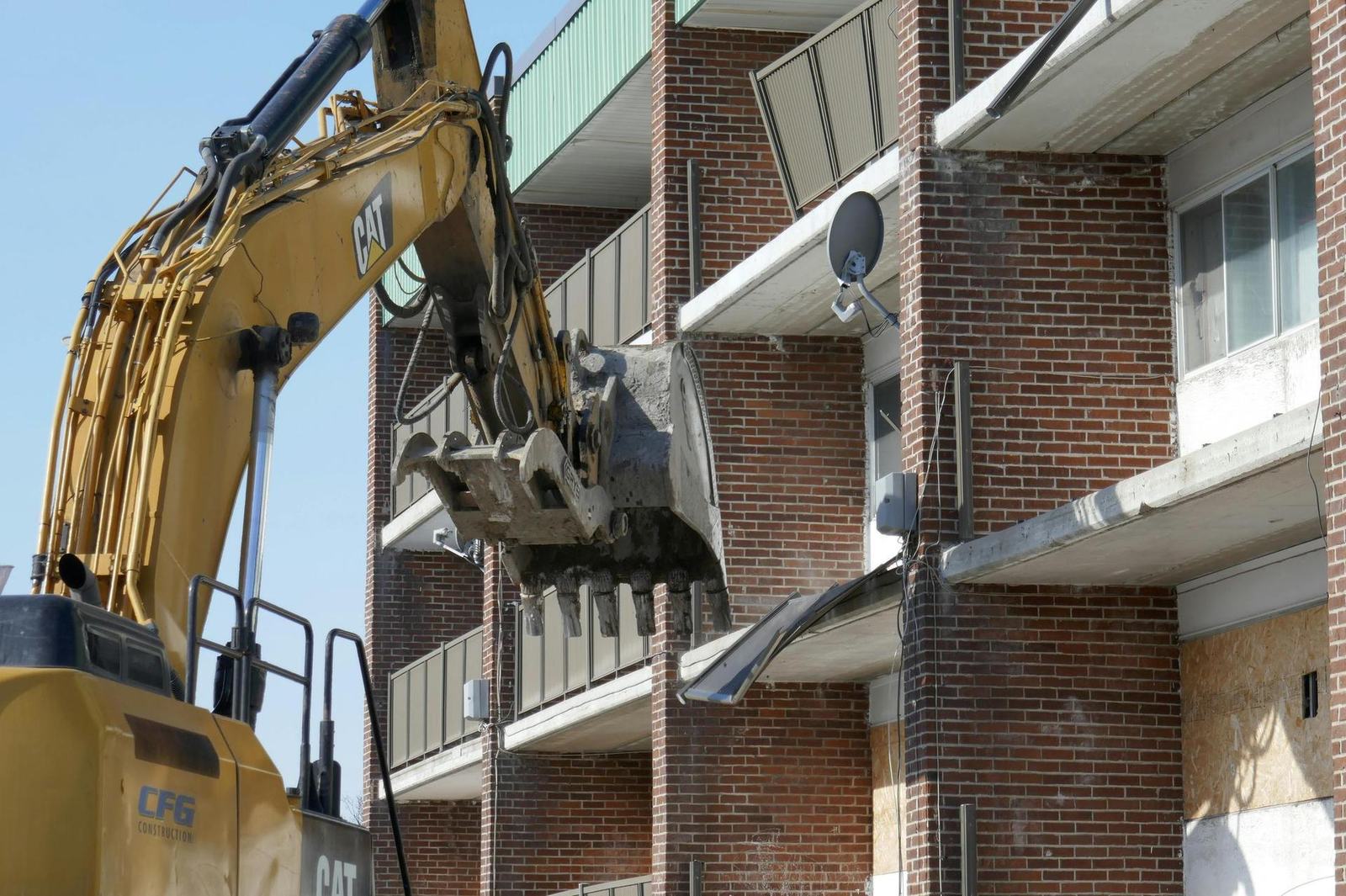
Full demolition removes the entire structure and typically prices lower per square foot because production speed is the whole game. Selective demolition removes specific elements while protecting the rest, costs more per unit of work, and is the right call whenever what stays is worth more than the premium to protect it. The decision usually turns on three inputs: the value of what would be preserved, whether the structure can safely take the cuts, and what the debris and access logistics look like on your specific lot.
What each scope actually means
Full demolition is the excavator answer: the structure comes down to grade or to foundation, debris gets loaded and hauled as one stream, and the site gets rough-graded behind it. The economics run on production, a practiced crew measures progress in structures per week, and that speed is why per-square-foot pricing is comparatively low.
Selective demolition is surgical. A load-bearing wall stays while the wall beside it goes. A second floor comes off while the first floor stays weathertight. A commercial suite gets stripped to shell while tenants work on both sides of it. The work is slower, more manual, sequenced with structural engineering when cuts touch load paths, and wrapped in protection, containment, shoring, and debris routes that do not destroy what the rebuild depends on.
The same house, two different projects
Picture a 1,400 square foot ranch with a solid foundation and a rotten everything-else. As a full demolition, it is a few days of machine work and hauling. As a selective demolition preserving the foundation and slab for the rebuild, it is careful deconstruction of the structure off the foundation, protection of the slab from equipment, and a debris operation that never gets to just push. Same address, same square footage, completely different jobs.
Where the costs actually diverge
Expect selective work to run meaningfully higher per unit of material removed, often two to four times the equivalent full-demolition rate for the same volume. The premium is not padding; it buys specific things.
- Labor replaces machine time. Hand and small-tool demolition where an excavator cannot swing.
- Shoring and structural sequencing. Temporary support before cuts, engineered when load paths are involved.
- Containment. Dust walls, negative air on occupied projects, floor and finish protection along debris routes.
- Slower debris logistics. Material leaves through a building, not off a pile, which changes crew size and duration.
- Protection liability. The contractor is now responsible for everything that stays, and pricing reflects that responsibility.
For the whole project, though, the comparison flips more often than owners expect: preserving a sound foundation, an intact first floor, or an operating tenant space frequently saves multiples of the selective premium in rebuild cost and lost revenue.
When full demolition is the right call
- Teardown-and-rebuild lots, where the new design shares nothing with the old structure.
- Structures past economic repair, fire damage, long vacancy, foundation failure, or rot that a structural assessment confirms is systemic.
- Condemnation and blight cases, where the municipality's requirement is a clear site.
- When the math says so, if selective protection costs more than the value of what it protects, stop protecting it.
- Site preparation for development, where everything on the parcel is in the way of what comes next.
When selective demolition earns its premium
- Additions and partial rebuilds, where new construction ties into framing and foundation that must survive intact.
- Occupied buildings, commercial suites gutted while the building operates, or a house where one wing stays livable through the project.
- Foundation and slab reuse, common on rebuilds where the existing footprint and footings carry into the new design.
- Historic fabric, pre-war homes where trim, masonry, or structure has real value, architectural or monetary.
- Interior gut renovations, taking a structure to studs and subfloor so the renovation starts from a clean, known shell.
Timeline: days versus weeks, and why
A typical single-family full demolition is measured in days once permits and disconnects clear, the machine work itself often fits inside one. Selective scope is measured in weeks because sequence rules the schedule: shoring before cutting, containment before dust, inspections at structural stages, debris leaving in controlled batches. Neither timeline is negotiable by enthusiasm; they are properties of the method.
What the calendar looks like in practice
The risk conversation nobody has early enough
The most expensive version of this decision is starting selective and converting to full mid-project, after opened walls reveal rot, undocumented framing, or a foundation that cannot carry the plan. The conversion costs you twice: you paid selective rates for work that is now moot, and you re-mobilize for full demolition on a compromised schedule.
The insurance against that outcome is boring and cheap: a structural assessment before scoping, honest exploratory openings where the unknowns live, and a contract that prices the conversion scenario in advance instead of negotiating it at the worst possible moment. When we quote a borderline structure both ways, that comparison, with the conversion risk priced, usually settles the decision in one conversation.
The phrase to fear in selective demolition is 'while we're at it.' Every additional element added mid-project re-triggers protection, sequencing, and sometimes engineering. Scope discipline, a written list of what goes and what stays, walked and flagged on site, is worth more than any negotiating tactic on the price.
The decision framework, three questions in order
- 1. What is the preserved element actually worth? Price the foundation, the floor, the tenant continuity in rebuild dollars and avoided downtime. If you cannot put a number on what selective protects, you are not ready to pay its premium.
- 2. Can the structure safely take the cuts? A structural assessment answers this before the contract does. Rot, undocumented framing, and marginal foundations convert selective plans into full demolitions at the worst prices.
- 3. What do the logistics say on this lot? Access for containment and debris, neighbors and occupancy, staging room, and season all move the comparison, sometimes decisively.
Run the three questions and price both paths when the answer is not obvious. We quote borderline structures both ways routinely, and the side-by-side, with conversion risk priced into the selective number, usually ends the debate in one conversation.
Permits, inspections, and how each scope moves through the city
Full demolition moves through the wrecking-permit lane: asbestos survey, utility disconnect verification, EGLE notification, permit, demolition, final grade. Selective structural work rides the building-permit lane instead, often with engineered drawings, framing inspections at stages, and a closer relationship with the inspector, because the city is now interested in what remains standing, not just that the site ends up clear. Neither lane is faster by wishing; the calendar risk sits in disconnects and asbestos for full demolition, and in engineering and inspection scheduling for selective. On a Liora Works project, both lanes are contractor scope, run in parallel with mobilization so the paperwork finishes before the crew needs it to.
Comparing quotes that are not the same scope
Selective bids diverge more than full-demolition bids because protection assumptions diverge. Normalize before comparing: does each bid name the same preserved elements, the same containment standard, the same debris route, engineering by whom, and patch-back to what condition? The cheap selective bid is usually cheap because it protects less, and you will buy the difference back during the rebuild, at rebuild prices. Make every bidder answer the same written scope list and the real comparison appears fast.
What selective demolition feels like while it happens
Owners who have lived through a full demolition and then a selective one describe them as different species, and expectations should match. Full demolition is loud, fast, and gone: a violent few days, then a quiet graded lot. Selective is a longer cohabitation: containment walls up for weeks, a debris path through or beside the space, dust control running, inspectors visiting at stages, and progress measured in cleared rooms rather than vanished structures. On occupied commercial projects, add off-hours phases and the daily discipline of leaving egress clean. None of this is a complaint list, it is what protection looks like from the inside, and clients who expect the rhythm rate the experience far better than clients who expected a faster, louder movie.
The tenant-improvement version, for commercial owners
The most common selective demolition in Metro Detroit is not residential at all: it is the commercial tenant-improvement strip-out, a suite taken to shell, deck exposed, walls and ceilings out, MEP terminated safely back to sources, while the building operates around the work. The economics run on three things: containment quality, because neighboring tenants are the client's clients; debris logistics, because material leaves through service corridors on a schedule, not off a pile; and coordination with the building engineer on shutdowns and tie-ins. If you manage property, the contractor's answers on those three items predict the project better than the price does, and the cheap bid that is vague on containment is the expensive bid wearing a disguise.