
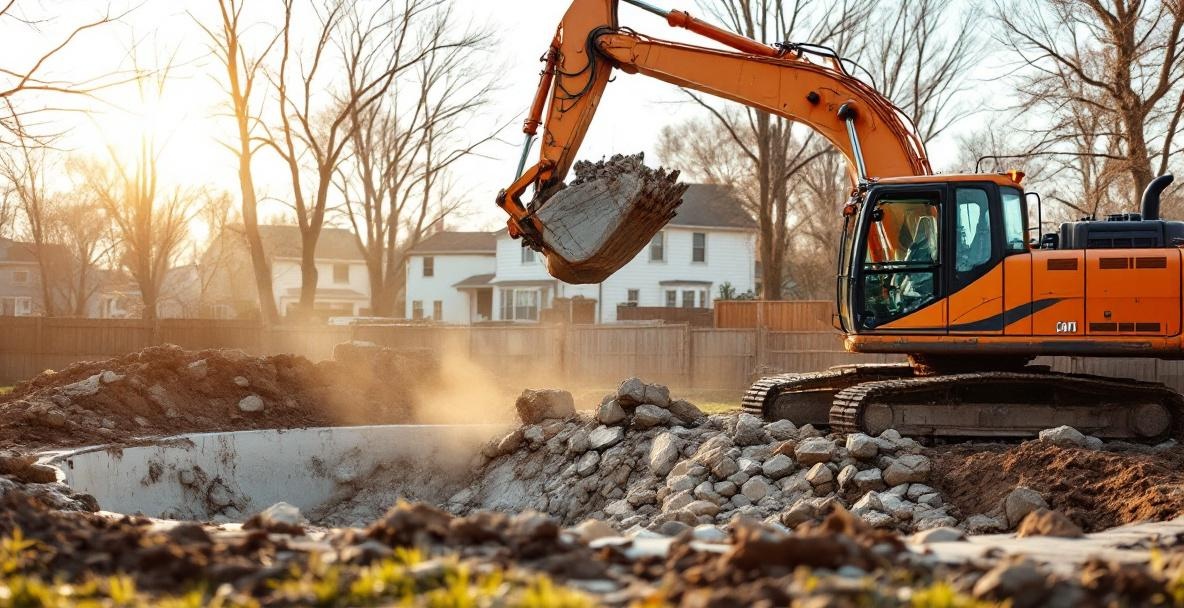
Inground pool removal in Metro Detroit runs $3,500 to $7,500 for a partial fill-in and $8,000 to $18,000 for full removal, depending on pool size, material, access, and disposal. Most residential pool removals take two to five days. Permits are required in nearly every Metro Detroit municipality, typically $100 to $500.
That pool in your backyard cost a fortune to build. Removing it will cost a fraction of that, but the number still varies more than most homeowners expect. A 16x32 concrete pool in Royal Oak with good backyard access is a different job than a 20x40 gunite pool in Grosse Pointe behind a fence with no gate wide enough for equipment. This guide covers what drives the price so you can scope the project accurately before the first contractor shows up.
Cost ranges by removal method
These ranges reflect Metro Detroit pricing for 2026. They include demolition, hauling and removal, backfill, and basic grading. Permits are separate.
The gap between partial and full removal is significant. That gap is the core decision you need to make before getting quotes.
What drives the price up or down
Six variables move a pool removal quote within the ranges above.
- Pool size and depth. Bigger pools mean more material to break up, more debris to haul, and more fill to bring in. Depth matters because a 9-foot deep end requires substantially more backfill than a 4-foot uniform depth.
- Pool material. Concrete and gunite pools are the hardest to demolish. The shell has to be broken with hydraulic hammers, cut into sections, and loaded piece by piece. Fiberglass shells can sometimes be lifted out whole or in large sections. Vinyl liner pools with steel or polymer walls are the fastest to remove.
- Access to the pool. This is the variable that surprises people most. If equipment can drive straight into the backyard from a side yard or alley, the job moves fast. If the only access is through a narrow gate, over a patio, or across landscaping that needs protection, equipment staging gets complicated and timelines extend. Some jobs require temporary fence removal just to get machinery in.
- Backfill requirements. Partial fill-ins use the demolished pool material as the base fill, then cap with clean fill dirt and topsoil. Full removals require importing all the fill material. In Metro Detroit, clean fill dirt runs $15 to $25 per cubic yard delivered, and a standard pool cavity needs 40 to 80 cubic yards depending on size and depth.
- Disposal costs. Concrete and gunite debris goes to recycling facilities or landfills. Metro Detroit recycling facilities charge $45 to $75 per ton for clean concrete. A standard concrete pool generates 15 to 30 tons of debris.
- Utilities and plumbing. Pool plumbing, gas lines for heaters, and electrical conduit all need proper disconnection. Gas line capping requires a licensed plumber. Electrical disconnection requires a licensed electrician. These trades add $500 to $1,500 to the total.
Access is the variable that blindsides most homeowners. A pool that takes three days with good backyard entry can take five when equipment has to thread through a 10-foot gate opening.
Partial fill-in vs full removal
This is the most important decision in the project, and it affects more than just the price.
Partial fill-in
Partial fill-in means draining the pool, punching drainage holes in the bottom of the shell, knocking down the top two to three feet of walls, collapsing the remaining structure into the cavity, and filling everything with compacted fill dirt and topsoil. Cost runs roughly half of full removal. Timeline is two to three days.
The tradeoff is land use. Most Metro Detroit municipalities classify a filled-in pool location as non-buildable. You cannot put a structure, addition, or new foundation over it. Landscaping, patios, and sheds are typically fine, but anything with a footing is off the table. You also have a legal disclosure obligation when you sell the property.
Full removal
Full removal means excavating the entire pool shell, hauling every piece off-site, importing clean fill to replace the volume, and compacting it to engineering standards. Cost runs roughly double a partial fill-in. Timeline is three to five days.
The benefit is the land returns to buildable status. No disclosure issues, no restrictions on future use, no settling surprises years later.
If you plan to sell the property within the next five to ten years, full removal is worth the premium. Buyers and their inspectors will find the filled pool, and it creates negotiation leverage against you. If you plan to stay long term and just want the yard back, a partial fill-in done correctly will serve you well.
Michigan-specific factors
Clay soil and drainage
Metro Detroit sits on heavy clay soil. Clay does not drain well, and it expands and contracts with moisture changes. After a pool removal, the backfilled area needs proper drainage planning or you end up with a depression in your yard that holds water after every rain. Competent contractors install drainage stone layers and ensure the fill is compacted in lifts to prevent settling.
Frost line depth
Michigan's frost line runs 42 inches deep across the Metro Detroit area. Any plumbing lines left in place during a partial fill-in must be capped below frost line depth or they become a freeze-thaw liability. Full removals that leave utility stubs need the same treatment.
Seasonal timing
Pool removal season in Metro Detroit runs April through November. The ground needs to be workable for excavation and backfill compaction. Winter removals are technically possible for the demolition phase, but final grading and topsoil work typically has to wait until spring thaw. Most contractors offer the best scheduling availability in early spring and late fall, with peak season running June through September.
Settling and compaction
Michigan's freeze-thaw cycles are hard on backfilled areas. Even with proper compaction, expect some settling in the first one to two years after removal. Plan for one topsoil touch-up the following spring. Contractors who compact fill in 12-inch lifts with a plate compactor or roller minimize this, but some settlement is unavoidable in Michigan clay.
The permit situation across Metro Detroit
Nearly every municipality in Wayne, Oakland, and Macomb counties requires a demolition permit for inground pool removal. Specifics vary by city.
Most cities require a demolition or building permit ($100 to $500), a site plan showing the pool location and proposed final grade, utility disconnect confirmations (gas, electric, water), and a final inspection after backfill. Some cities, particularly in Oakland County (Birmingham, Bloomfield Township, Troy), also require an engineered compaction plan for full removals. Detroit requires a demolition permit through BSEED, similar to other residential demolition work.
Call your local building department before signing a contract. The contractor should handle the permit application, but knowing the requirements upfront prevents scheduling surprises. Permit processing takes one to three weeks in most Metro Detroit municipalities.
The removal process step by step
A typical residential inground pool removal follows this sequence.
- Site assessment and quote. Contractor visits the property, measures the pool, checks depth, identifies the shell material, evaluates equipment access, and reviews utility connections. Quote is issued within a few days.
- Permit application. Contractor pulls the demolition permit from your city or township. Processing time varies: one to three weeks is typical across Metro Detroit.
- Utility disconnection. Licensed electrician disconnects pool electrical. Licensed plumber caps the gas line if applicable. Water supply line is capped. These trades are typically scheduled the week before demolition begins.
- Pool drain and prep. The pool is drained (contractor coordinates discharge per local stormwater rules). Decking and coping around the pool edge are removed.
- Demolition. For partial fill-ins: drainage holes are punched in the pool bottom, upper walls are broken down, and debris is collapsed into the cavity. For full removal: the entire shell is broken up with hydraulic hammers, loaded onto trucks, and hauled to a recycling facility or landfill.
- Backfill and compaction. Fill material is brought in and compacted in lifts. For partial fill-ins, the collapsed pool material serves as the base, with clean fill and topsoil on top. For full removal, all fill is imported clean material.
- Final grading and restoration. The area is graded to match surrounding yard elevations, topsoil is spread, and the site is prepped for seeding or sod.
- Final inspection. The municipality inspects the completed work. Once passed, the permit is closed.
Most residential pool removals run two to five days for the physical work, plus permit processing time on the front end.
How to get an accurate quote
What to have ready
- Pool dimensions (length, width, depth at shallow and deep ends)
- Pool material (concrete, gunite, fiberglass, or vinyl liner with steel/polymer walls)
- A description of backyard access (gate width, distance from street, obstacles)
- Whether the pool has a gas heater
- What you want the finished yard to look like
What a good quote includes
A complete pool removal quote should itemize demolition and shell removal, all debris hauling and disposal, backfill material and compaction, final grading, utility disconnection coordination, permit handling, and a timeline.
Red flags
Quotes that skip the site visit, quotes that do not mention compaction method, quotes that exclude disposal fees, and contractors who cannot tell you which disposal facility they use. A pool removal done wrong settles into a crater in your backyard within two years. The compaction method is the difference between a flat yard and an expensive fix.