
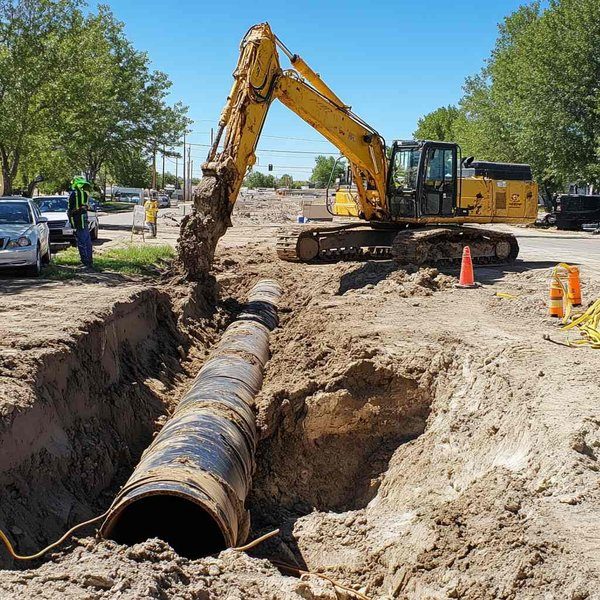
Residential sewer line replacement in Metro Detroit typically runs $3,500 to $8,000, with deep lines, long runs, and street-crossing work pushing $10,000 to $15,000 or more. Open-trench replacement prices lower per foot but tears up everything above the line; trenchless methods cost more per foot and save the landscaping and concrete. Depth, length, method, and surface restoration drive the number, and a camera inspection converts the range into a real quote. Most residential replacements finish in one to three working days.
Why Metro Detroit lines fail on schedule
The housing stock across Detroit, Royal Oak, Warren, Livonia, and the older ring suburbs was plumbed with vitrified clay and cast iron. Clay laterals have joints every few feet, and every joint is an invitation to roots; cast iron corrodes from the inside until the bottom of the pipe is a suggestion. Add Michigan's clay-heavy soils that move with freeze-thaw and you get the standard failure catalog a camera finds in lines past design life: root mats at the joints, bellies holding water, offsets where soil movement sheared the run, and cracks that grew for a decade before anyone noticed.
None of this is bad luck. Clay laid in 1955 performing until the 2020s did its job. The market-wide replacement wave happening across Metro Detroit right now is infrastructure aging out on schedule, which also means your neighbors' quotes are useful data, and the contractors doing this daily have seen your exact failure before.
What replacement costs, the honest ranges
Pricing follows footage, depth, method, and what sits above the line. These are the typical Metro Detroit ranges we see quoted and performed on excavation and sewer work:
The five variables that move your number
- Depth. Every added foot means more excavation, more spoil handling, trench protection for the crew, and more backfill and compaction. Depth is the quietest budget-mover on the list.
- Length. Distance from house exit to the connection point, city main or septic, sets the base footage math.
- Method. Open trench versus trenchless changes the per-foot price and the restoration bill in opposite directions.
- Surface. Lawn is cheap to restore. Stamped concrete, mature landscaping, irrigation, and driveways are not, and they often decide the method.
- Access and season. Tight side yards slow machines; frost adds effort in deep winter. Neither is prohibitive, both are honest line items.
Open trench vs. trenchless, the real comparison
Open trench excavates the full run, replaces the pipe in the open where everyone can see the grade, and backfills in compacted lifts. It is the lower per-foot cost and the only honest option when the line has collapsed flat, lost grade, or wanders in ways a machine cannot follow blind. The tradeoff is everything above the trench: lawn, sprinklers, walkways, sometimes the driveway.
Trenchless methods work through access pits and leave the surface mostly intact. Pipe bursting pulls a new HDPE line through the old one, fracturing it outward as it goes, a full-diameter, decades-rated replacement. Cured-in-place lining builds a new pipe inside the old one, best where structure is mostly intact. Per-foot cost runs higher, but when the alternative is replacing stamped concrete or twenty years of landscaping, trenchless frequently wins the total-project math. Not every line qualifies: severe collapse, bad grade, and certain offsets rule it out, which is precisely what the camera inspection determines before anyone quotes a method.
How the camera inspection drives everything
The inspection is the cheapest decisive step in the whole project. It locates the line, measures depth at the failure, shows whether damage is local or systemic, and answers the trenchless-eligibility question. A quote without a camera behind it is a guess wearing a number, and both the too-high and too-low guesses cost you, one immediately, the other at change-order time.
The timeline, start to flushing
- MISS DIG marking first, by law. Michigan's 811 process marks buried utilities before any dig, typically within about three business days of the request.
- Excavation or pit work: a day on most residential runs, longer for deep or long lines.
- Replacement and connection: the pipe work itself is usually hours once the run is open, laid to grade on proper bedding.
- Municipal inspection where required: many Metro Detroit communities inspect the open trench or the connection before backfill, scheduled into the same window.
- Backfill and compaction: in lifts, because dumped fill settles into a trench-shaped ditch across your yard within a year.
- Restoration: rough grade same visit; topsoil, seed, and concrete per the scope you agreed to, in daylight, in writing.
Most residential replacements run one to three working days end to end. Water service typically stays on throughout; sewer use pauses only during the active cutover hours. Emergency work compresses all of this, and full backups get prioritized, because a house without a working sewer is not a scheduling item, it is a same-week problem.
Reading quotes like a contractor
Two quotes $3,000 apart are usually not the same scope wearing different prices. Normalize them: same method, same depth assumption, same restoration standard, permits and inspection included, disposal of spoil and old pipe included, and the tonnage of imported bedding and backfill stated. The cheap quote is most often cheap because restoration says rough grade only, or because depth is priced optimistic and trued up by change order once the hole is open. Make every bidder answer the same written scope and the real spread collapses fast.
A replacement quote without a camera inspection behind it. A per-foot price with no depth stated. Restoration excluded in fine print. No mention of MISS DIG marking or municipal inspection, both of which are non-optional. And any pressure to skip the permit, which converts a plumbing project into a liability project.
Insurance, warranties, and the paperwork that matters after
Standard homeowners policies usually exclude wear-and-tear failure, which is what most clay and cast iron failure legally is. Some carriers sell service-line riders that do cover exactly this; it is worth checking your declarations before assuming either way. Whatever the insurance answer, keep the after-paperwork: the camera footage, the inspection sign-off, the material and workmanship warranty in writing, and the as-built depth and location of the new line. The next owner's inspector will ask, and a documented new sewer is a genuine selling point on housing stock this age.
Three scenarios, priced the way quotes actually land
Ranges get real when they wear a scenario. These three are typical shapes we quote across Metro Detroit, framed as the composite situations they are.
- The shallow front-yard run. A 1950s ranch, forty-odd feet of clay at five to six feet deep, failure mid-run under lawn. Open trench is the value play: standard-range pricing toward the middle, restoration is topsoil and seed, done inside two days. Trenchless would work but has nothing expensive to save.
- The finished-lot run. Same era, same footage, but the line crosses a stamped patio walk and an irrigated bed. Now trenchless earns its premium: the burst quote beats open-trench-plus-hardscape-restoration on total, and the yard barely notices. This is the scenario where the cheap open-trench quote is only cheap until the restoration invoice.
- The deep street-side failure. The camera finds the break at the connection, nine feet down near the pavement. This is the top of the range and honestly quoted as such: trench protection, possible street involvement with municipal restoration standards, and the schedule built around inspection. Nobody's discount changes the physics, and the bid that pretends otherwise is the one to fear.
Why the materials fail on a timeline you can predict
Vitrified clay was the standard through the 1960s: excellent pipe, mortal joints, with root intrusion as its retirement plan. Cast iron carried the mid-century transition and corrodes from the inside, bottom first, where the flow lives. Orangeburg, bituminized fiber, appears in pockets from the 1940s through the 1960s and fails by deformation, ovaling until the camera cannot pass, and it is always a replacement conversation, never a repair one. PVC took over by the 1980s and mostly converts sewer failure from a material inevitability into an installation-quality lottery. Match your house's decade to that sequence and the camera findings stop being surprises; they become confirmations.
The questions that make any sewer quote honest
- What did the camera show, and can I have the footage? The quote's entire foundation, and yours to keep.
- What depth is priced, and what happens if the trench finds different? The change-order question, asked before the hole exists.
- Which method, and why not the other one? A contractor who can argue both sides of trench-versus-trenchless for your line has actually thought about your line.
- What exactly does restoration include? In deliverables: inches of topsoil, seed, concrete patch-back standards, irrigation repair.
- Are the permit, inspection, and MISS DIG marking in the price? All three are non-optional; the only question is whose line item they are.
- What warranty covers the pipe, and what covers the workmanship? Different coverages, both in writing, both transferable to the next owner.